
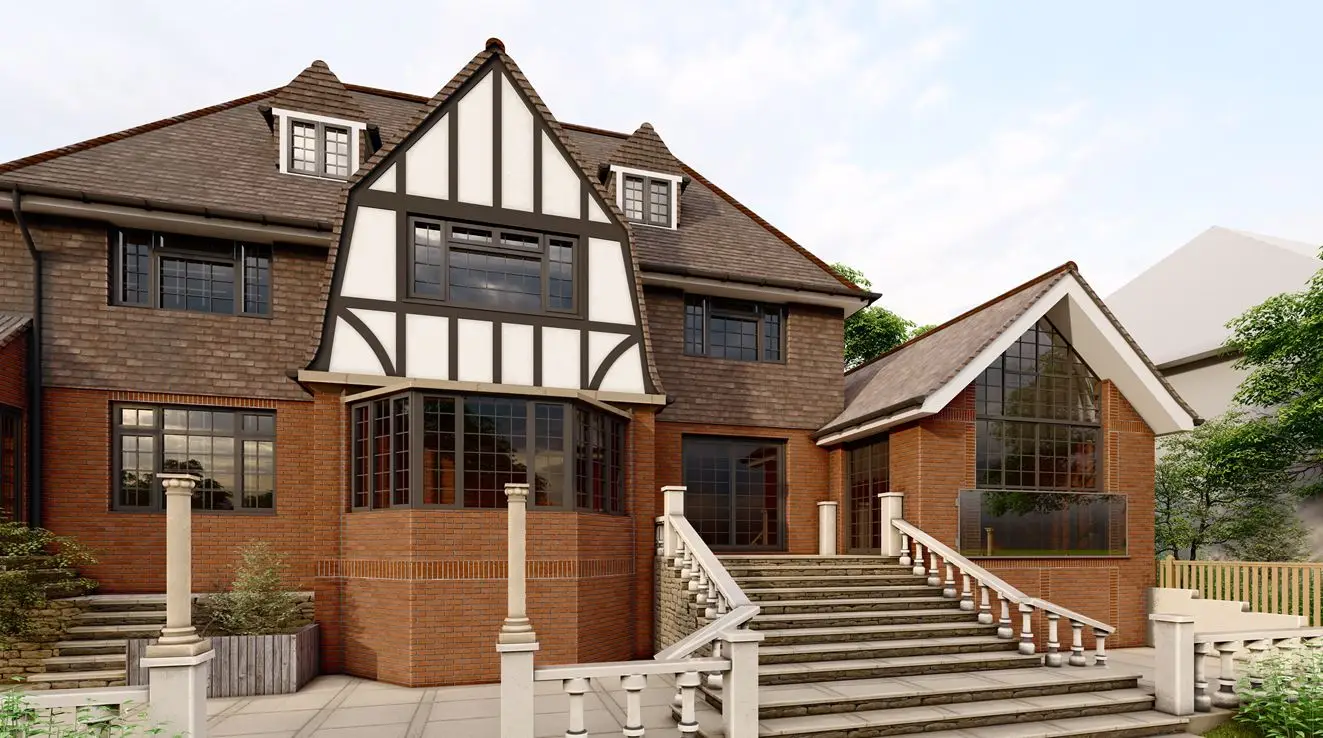
As the Hampshire landscape begins to bloom this March, many homeowners in areas like Waterlooville and Portsmouth find their thoughts turning toward property improvements. There is a distinct “fresh start” feeling that comes with the spring season, making it the ideal time to move beyond the dreaming phase and into concrete home renovation planning. Whether you are feeling the squeeze in a growing family home or simply want to modernise your living environment, the decision usually boils down to two popular paths: extending out into the garden or converting the unused space above your head. Both options offer incredible potential to reshape how you live while significantly boosting your property’s market appeal.
The choice between a rear addition and an attic transformation is rarely just about square footage; it is about how you want to interact with your home on a daily basis. March is the perfect month to assess your site, as the increasing daylight helps you visualise how a new glass-roofed extension might capture the sun or how a dormer window could frame a view of the South Downs. Engaging in thorough home renovation planning during these early spring weeks allows you to navigate the design and approval stages in time for a summer build start. This proactive approach ensures that the most disruptive parts of the construction happen during the drier months, keeping your project on schedule and your stress levels low.
At MCA Design, we have helped hundreds of families across the South Coast navigate this exact dilemma by providing clear, architectural insight into the feasibility of each route. A well-executed project is a balance of aesthetics, budget, and structural reality, all of which must be aligned before the first brick is laid. By prioritising home renovation planning now, you can explore creative layouts that you might not have considered, such as a “broken-plan” living area or a master suite with a Juliet balcony. We believe that spring is the season of possibility, and there is no better time to start the conversation about turning your current house into your long-term dream home.
Ultimately, the goal is to create a space that feels like a natural evolution of your property rather than a forced addition. This requires a deep understanding of local planning trends and building regulations, which continue to evolve in 2026 with a focus on sustainable, high-performance construction. Effective home renovation planning acts as your roadmap, helping you weigh up the immediate costs against the long-term lifestyle gains. As we dive deeper into the pros and cons of lofts and extensions in the following sections, remember that the “right” choice is the one that best serves your family’s unique rhythm and future aspirations.
The Vertical Advantage: Why Call a Conversion Specialist?
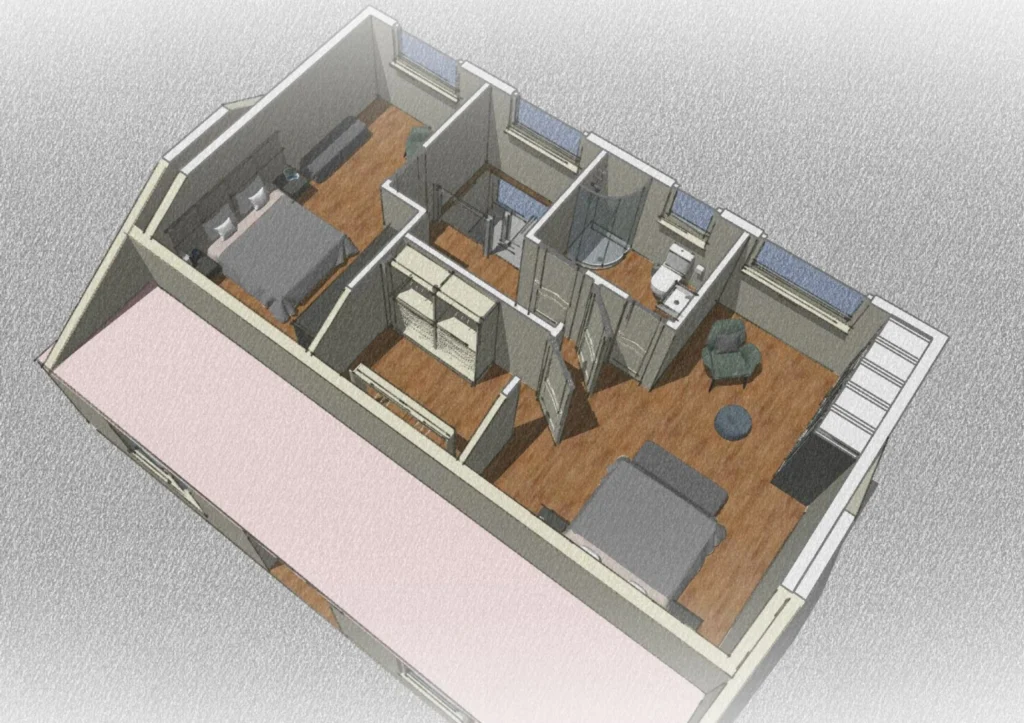
For many families in the South of England, the desire for an extra bedroom or a secluded home office doesn’t necessarily mean they want to lose a portion of their garden. This is where a loft conversion specialist UK becomes an invaluable partner in your home’s evolution. In 2026, building “up” has remained one of the most efficient ways to gain significant square footage without the heavy groundworks required for a traditional extension. Most attic spaces are essentially “dead volume” that can be transformed into high-value master suites, often complete with bespoke en-suites and walk-in wardrobes. By utilising the existing footprint of your home, you can achieve a transformation that feels like a natural extension of your living space rather than a separate addition.
Working with a dedicated loft transformation specialist UK allows you to navigate the specific technicalities of roof structures with absolute precision. Whether your home has a traditional cut-and-pitch roof or a more modern trussed system, there are innovative engineering solutions available to create the head height you need. In 2026, we are seeing a rise in “hip-to-gable” conversions for semi-detached properties in areas like Havant and Waterlooville. This specific type of project straightens the slanted end of your roof to create a much larger internal volume, often providing enough room for a spacious landing and two additional rooms. This vertical growth is particularly effective for homeowners who want to maintain their outdoor entertaining areas or children’s play spaces.
From a financial perspective, the return on investment for an attic project is historically robust. While the initial outlay is significant, a loft specialist in the UK will tell you that adding a fourth or fifth bedroom can increase a property’s value by as much as 20% to 25%. This is often a much higher yield than adding a ground-floor room, especially in competitive markets like Portsmouth where space is at a premium. Furthermore, because most loft projects fall under Permitted Development Rights, the administrative journey is often faster and less prone to the delays associated with full planning applications. This speed of delivery, combined with the minimal impact on your external landscaping, makes it a top choice for busy households.
Finally, the environmental benefits of building within your existing roof should not be overlooked. In 2026, a loft specialist in the UK will prioritise high-performance insulation and energy-efficient glazing to ensure your new space remains comfortable year-round. Modern building regulations require strict U-values for roof rooms, meaning your new master suite could actually be the most thermally efficient part of your house. By choosing to convert your loft, you are making a sustainable choice that maximises the potential of the structure you already own. It is a sophisticated way to future-proof your home, providing the extra space you need today while ensuring long-term energy savings and property growth.
Ground-Level Transformations: Understanding the 2026 Rear Extension Cost
While building upwards is a fantastic way to add bedrooms, many homeowners find that their primary frustration lies with the layout of their ground floor. A single-storey addition is often the most effective way to create that coveted open-plan kitchen and dining area that serves as the heart of the modern home. When investigating a rear extension cost, it is important to understand that prices in 2026 have stabilised but remain reflective of higher material and labour standards. For a standard, high-quality build in the Hampshire area, you should generally budget between £1,900 and £3,000 per square metre, depending on the level of finish and the complexity of the structural openings required.
The total investment for a ground-floor project is influenced heavily by the “hidden” elements that occur before the first brick is even laid. For example, a significant portion of your rear extension cost will be allocated to groundworks, drainage diversions, and structural steelwork. If you are planning to “knock through” from your existing house to create a seamless flow, the cost of the steel beams and the labour to install them safely can range from £2,500 to £8,000. These structural interventions are what allow for the wide-span bi-fold doors and vaulted ceilings that define the most successful spring renovations.
In addition to the shell of the building, the internal fit-out is where budgets can vary most significantly. If your goal is a premium kitchen-diner, the rear extension cost must also account for new plumbing, electrical consumer unit upgrades, and high-end flooring. We often advise our clients to allow an additional £15,000 to £35,000 for a mid-to-high-range kitchen installation, including appliances and worktops. While this increases the upfront expenditure, the lifestyle benefits of having a social, light-filled space that connects directly to your garden are often cited by homeowners as their most rewarding investment.
Finally, it is worth noting that a ground-floor extension offers a unique opportunity to improve the energy efficiency of your entire property. By incorporating high-performance floor insulation and advanced glazing, you can significantly reduce the heat loss from the rear of your home. Although these sustainable features add to the initial rear extension cost, they lead to long-term savings on energy bills and a more comfortable living environment year-round. Investing in quality today ensures that your new space is not just a seasonal addition, but a resilient and valuable part of your property for decades to come
The “Hidden” Architectural Trade-offs
Choosing between a vertical or horizontal expansion involves more than just selecting a preferred room type; it requires a deep dive into the practical trade-offs that impact your daily life. One of the most significant considerations for any loft conversion specialist UK is the “staircase tax” on your existing first floor. To reach the new rooms above, a permanent staircase must be installed, which typically consumes a portion of a current bedroom or a large section of your landing. In 2026, building regulations remain strict on staircase pitch and headroom, often meaning that to gain a new master suite at the top, you must be prepared to sacrifice a small area of the floor below.
Conversely, ground-floor projects present a different set of spatial challenges, primarily the loss of outdoor territory. While a single-storey addition can transform your kitchen into a social hub, it physically reduces the size of your garden, which can be a major factor for families with young children or those who enjoy outdoor entertaining. When we calculate a rear extension cost, we also factor in the “overshadowing” effect that a new structure might have on the rest of your lawn. Our design team works to mitigate this by using clever roof angles and glass features to ensure that the garden you keep remains light-filled and inviting.
Staircase placement in a loft project is also a masterclass in architectural puzzle-solving. Ideally, the new flight should sit directly above the existing stairs to maintain a natural flow and minimise the loss of usable space on the first floor. A loft conversion specialist UK must ensure there is at least 1.9 metres of headroom at the centre of the new flight to meet legal safety standards. If your current landing is too narrow, we might suggest “re-pitching” a section of the existing roof or using a space-saving paddle staircase, although the latter is usually only permitted for access to a single habitable room.
For rear projects, the trade-off often involves the “internal” room that the extension builds away from. Many homeowners find that by extending out, the original middle room of the house—now robbed of its external window—becomes dark and underutilised. To counter this, we often include high-performance roof lights or “sun tunnels” as part of the rear extension cost to bring natural light deep into the plan. These hidden considerations are exactly why professional architectural guidance is essential; we help you look beyond the new walls to ensure the entire house continues to function harmoniously after the builders have left.
Planning and Disruption: What to Expect
Before the first bag of cement arrives, it is essential to consider the administrative and logistical journey of your project. In 2026, the planning landscape in Hampshire remains relatively supportive of residential growth, but the route to approval differs significantly between building up or building out. Most attic projects are championed by a loft conversion specialist UK because they often fall under Permitted Development Rights. This means that as long as your design stays within specific volume limits—typically 40 cubic metres for terraced homes or 50 cubic metres for semi-detached properties—you may not need full planning permission. This can save you weeks of waiting for a council decision and avoids the uncertainty of a public consultation period.
Conversely, a ground-floor addition often requires a more formal approach, particularly if you are planning something larger than a modest three-metre extension. While the “Larger Home Extension” scheme allows for depths of up to six or eight metres under a “Prior Approval” process, anything that significantly alters the character of your street or impacts a neighbour’s light will require a full planning application. When we calculate your rear extension cost, we always include the fees for these applications and the time needed to liaise with local authorities like Havant Borough Council or Portsmouth City Council. This stage typically takes eight to twelve weeks, so starting your design in March is vital to ensure you are ready for a summer construction window.
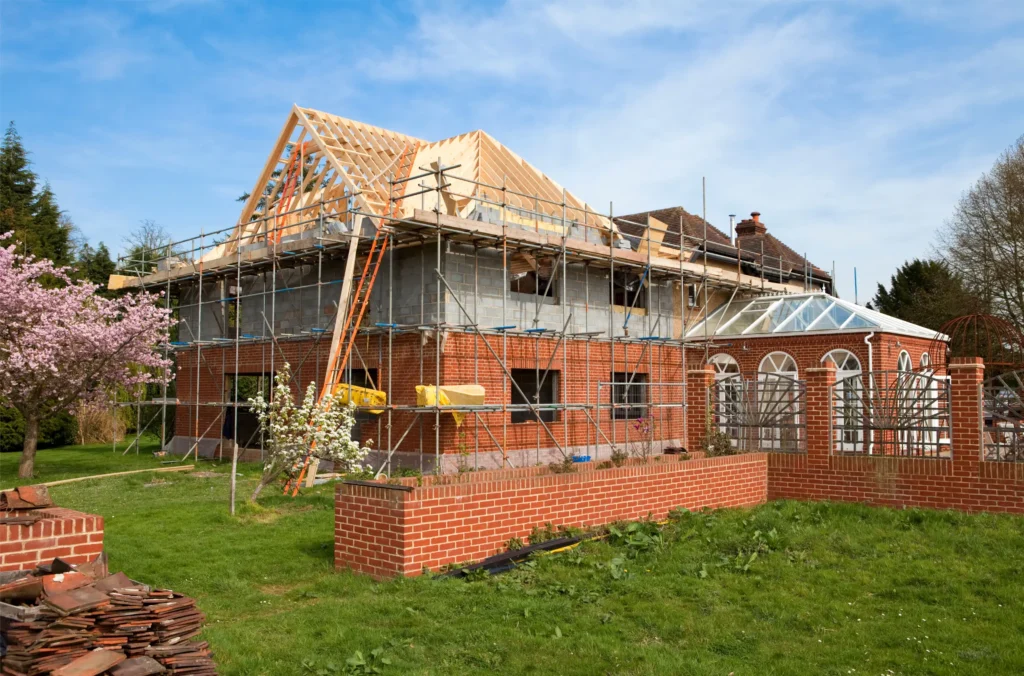
The level of daily disruption is another “hidden” factor that should influence your choice. A conversion is often viewed as the “cleaner” option because much of the heavy work, such as steel delivery and roof restructuring, can be managed via external scaffolding. A loft conversion specialist UK will often create a temporary entrance through the roof, allowing builders to work above your head while you continue to use your kitchen and living areas as normal. While there will be some dust and noise when the new staircase is fitted, the “lived-in” experience is generally less intrusive than a ground-floor project that requires removing large sections of your external walls.
Ground-level extensions, while transformative, do involve more intensive site activity. Because a significant rear extension cost is dedicated to excavations and foundation pouring, you should expect heavy machinery in your garden and a fair amount of mud during the early stages. If your project involves creating a large open-plan space by knocking through into the existing house, there will be a period where your home is exposed to the elements and dust management becomes a daily priority. However, for most of our clients, this short-term inconvenience is a small price to pay for a lifetime of improved social space and a better connection to their outdoor environment.
Extension or Loft? Your Spring Decision Guide
Choosing between building up or out is the first step toward a more functional home. To help you decide, we have created a quick logic quiz followed by answers to the most common questions from our Hampshire community.
The “Up or Out” 5-Question Quiz
Do you have a young family or active pets?
If yes, a loft conversion preserves your vital garden play space.
Is your kitchen currently cramped and dark?
If yes, a rear extension is the only way to create a bright, open-plan social hub.
Are you looking for the highest possible return on investment?
In the South of England, adding a fourth or fifth bedroom via a loft often yields a higher resale percentage.
Do you want to avoid moving out during the build?
Loft transformations are typically less intrusive, as much of the work happens via external scaffolding.
Is your property in a National Park or Conservation Area?
Rear extensions often face stricter “garden coverage” rules, while internal loft work can be more straightforward to approve.
Frequently Asked Questions: Hampshire 2026
What is the current rear extension cost for a terraced house in Portsmouth?
In 2026, a high-quality single-storey rear extension in Portsmouth typically starts at approximately £45,000 for the shell and core. This rear extension cost can increase depending on your choice of glazing and high-spec internal finishes like premium kitchen islands or underfloor heating systems.
Can a loft conversion specialist UK help me if my roof is too low?
Yes, there are several architectural solutions for low roof pitches. We can often lower the ceiling of the floor below or, where permitted, create a “mansard” or “dormer” to gain the required 1.9 metres of headroom. A loft transformation specialist UK will conduct a measured survey to determine which structural approach is most cost-effective for your specific property.
What are the 2026 planning rules for extensions in the South Downs National Park?
Properties within the South Downs are subject to the “30% Rule,” which generally limits the total increase in floor space to approximately 30% of the original building’s size. Whether you are building a loft or an extension, you must also consider “Dark Skies” policies, which may limit the amount of roof glazing allowed to prevent light pollution.